MEET SHAWN MORRISON
Incoming Executive Director
What led you to make this big pivot in your career? And do you feel like it is a pivot?
On a personal level, it doesn’t feel like a pivot. If you trace the thread back to my high school years, the impulse to counsel, to invest in people, and to look for the dignity in others has been woven into my upbringing—my adulthood—really, my whole life. So, in that broad sense, it doesn’t feel like I’m changing direction. From a philosophy-of-life perspective, it isn’t a pivot.
From a career perspective, though, it definitely feels like a pivot. I’ve done a lot of leading, and I’ll be the first to admit I’m a little geeky—I like spreadsheets, I like fixing problems, and I like building systems and databases. That stuff genuinely energizes me. But if you asked me what a dream job, a dream opportunity, or even a dream day would look like, I wouldn’t say spreadsheets first; I’d say investing in people first. That’s why I’m drawn to Barnabas. It’s people-centric, and it engages people in the parts of their lives that are real and that matter. And it’s different from what I’ve done before, because Barnabas serves the individual and also serves the local church. Both of those aspects of this new role excite me.
Can you tell me a little bit about your family?
I met my wife in college at the University of Richmond, and our story really started there. She went on to study gerontology at VCU and now works in hospital administration. After college, I joined staff with InterVarsity Christian Fellowship for a few years before beginning a career in philanthropy.
We’ve spent almost 20 years of our adult lives in Richmond, where we raised our two boys. When they were just starting elementary school, we adopted our 13-year-old niece during a season of instability in the extended family, and it’s been incredibly heartwarming to watch her grow and blossom into a young adult.
My mom was also a significant part of my adulthood. We moved her to Richmond after an early Alzheimer’s diagnosis, and it was easier to provide the support she needed with her in town rather than making frequent trips to North Carolina. Mom passed away after contracting COVID in 2020. I loved her, and I respected her. She made sacrifices for me and instilled certain things in me—like the value of education, faith in God, and community engagement—and I appreciate that she laid that foundation.
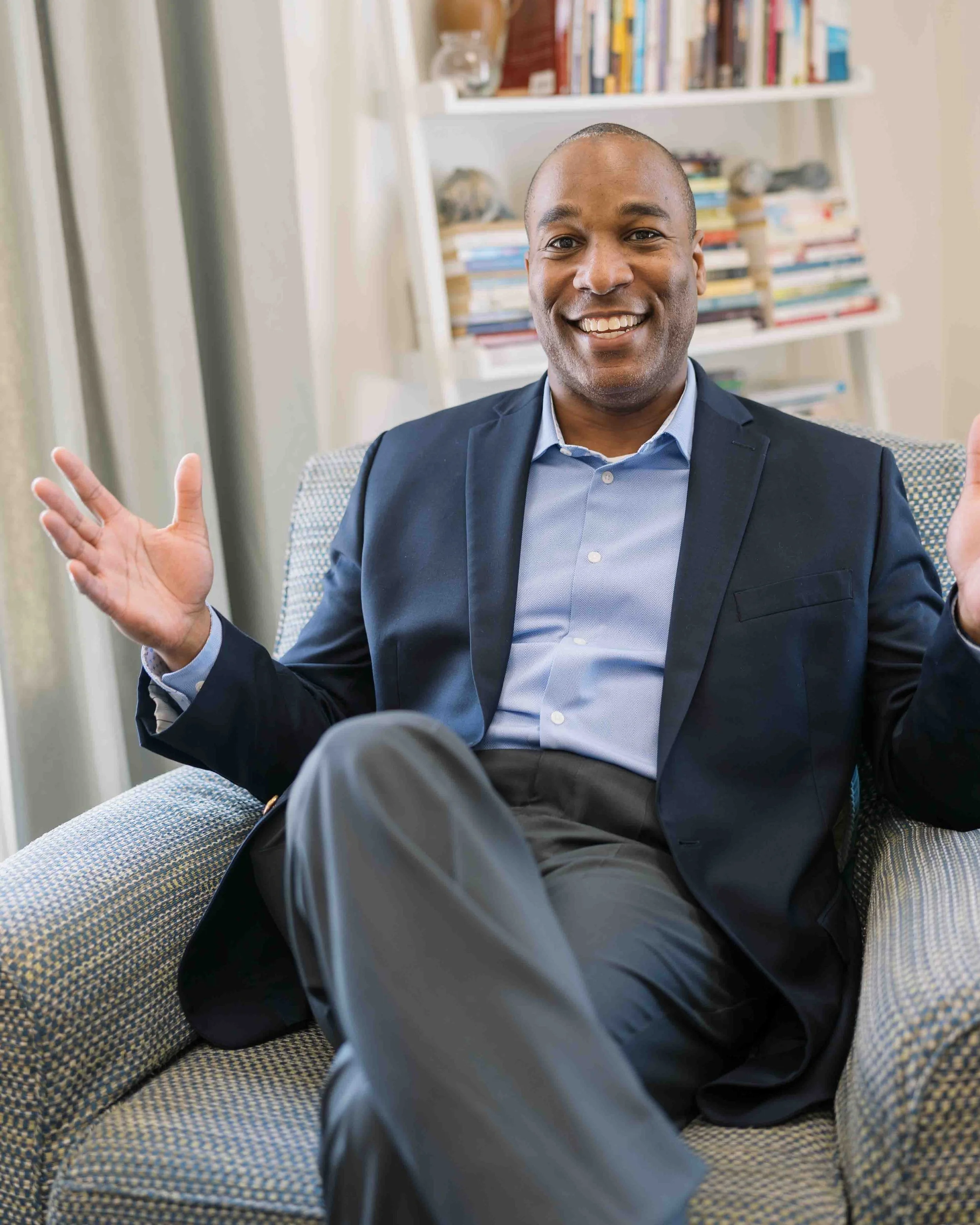
what was life like for you growing up? were you originally from the richmond area?
I grew up in New York in the 1980s—Queens, specifically. My parents divorced when I was young, so it was mostly me, my mom, and my mom’s side of the family. We all lived close—within about 30 minutes of each other—so family was a steady, fun presence. At the same time, my mom and I moved around town a lot, and I spent plenty of years wishing I had a sibling or a father around. That mix—strong family support, but an only child with a lot of change—made me pretty independent early on.
The biggest change was when my grandparents retired to Raleigh, and my mom and I followed right as I was heading into ninth grade. If you’ve ever moved at that age, you know it can feel like the ground shifts under you. I was trying to get my bearings when all of a sudden, there’s a tremor! Raleigh couldn’t have been more different from Queens. In New York I was a latchkey kid—walking everywhere or taking the bus. In Raleigh, you needed a car to do just about anything. And I went from being on high alert about crime and violence to this place where people left their doors unlocked and the town got quiet after sunset.
And then there was the cultural shift with my age group. We landed in a part of town that was mostly white and pretty affluent, and for the first time I was the only Black kid in a lot of my classes. I wanted to fit in, but I often felt like the “other.” I came to this new environment seeing life very differently. Still, even back then I really believed every person has God-given dignity—so I tried to stay curious instead of guarded. I wanted to be myself but also learn as much as I could about this new world my classmates lived in. So, I took in as much as I could from classmates, their parents, coaches, and teachers. Looking back, that’s a big reason I’ve always been a learner—and it’s kind of ironic that now I feel God saying, “It’s your season to speak,” and to use my voice to invest in the personal development of others.
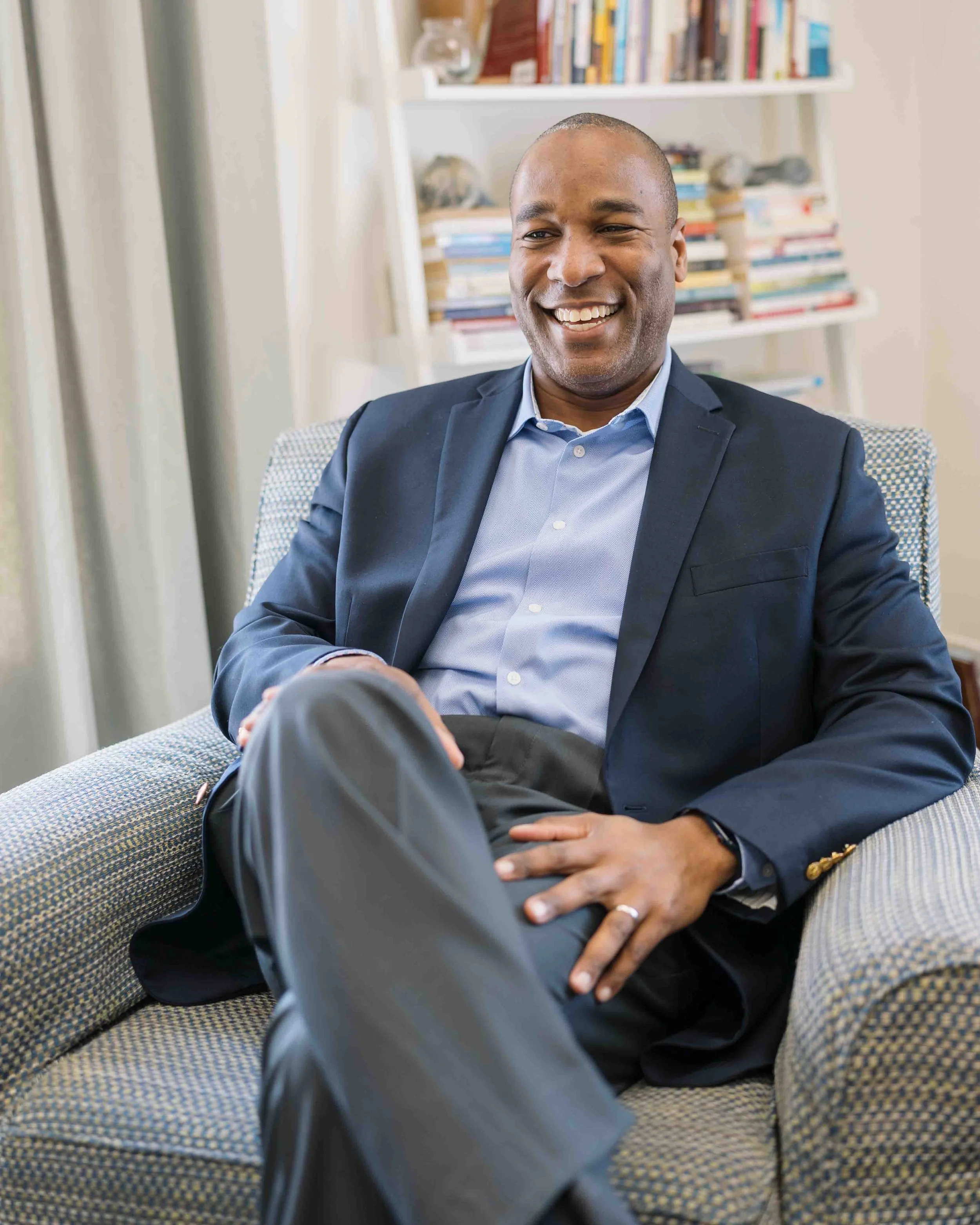
I understand this spring you have other big news beyond joining the Barnabas team. Would you be willing to share it with us?
Yes—this spring I’m also celebrating a long-awaited graduation from seminary. I am proud to say that May 2026 marks that milestone. It had been on my mind since I was in my mid-twenties, but for a variety of reasons, I resisted pursuing a seminary degree. By the time I felt the call to seminary, I was in my 40s with family and work responsibilities. It has taken almost six years to complete the Master’s in Theological Studies program at Gordon-Conwell. This has been a meaningful and life-shaping experience, and I am grateful!